
Build IoT Edge Applications Using C++ and JavaScript
machina.io EDGE is a lightweight and efficient software development kit (SDK) designed for building IoT edge computing applications on Linux-based devices. It enables developers to create scalable edge solutions using C++ and JavaScript while maintaining high performance and low resource usage.
The platform simplifies the integration of sensors, actuators, embedded devices, and cloud services, allowing developers to focus on building intelligent applications rather than managing complex system integrations.
With machina.io EDGE, data can be processed locally at the edge, improving system responsiveness, reducing latency, and minimizing the amount of data transmitted to the cloud.
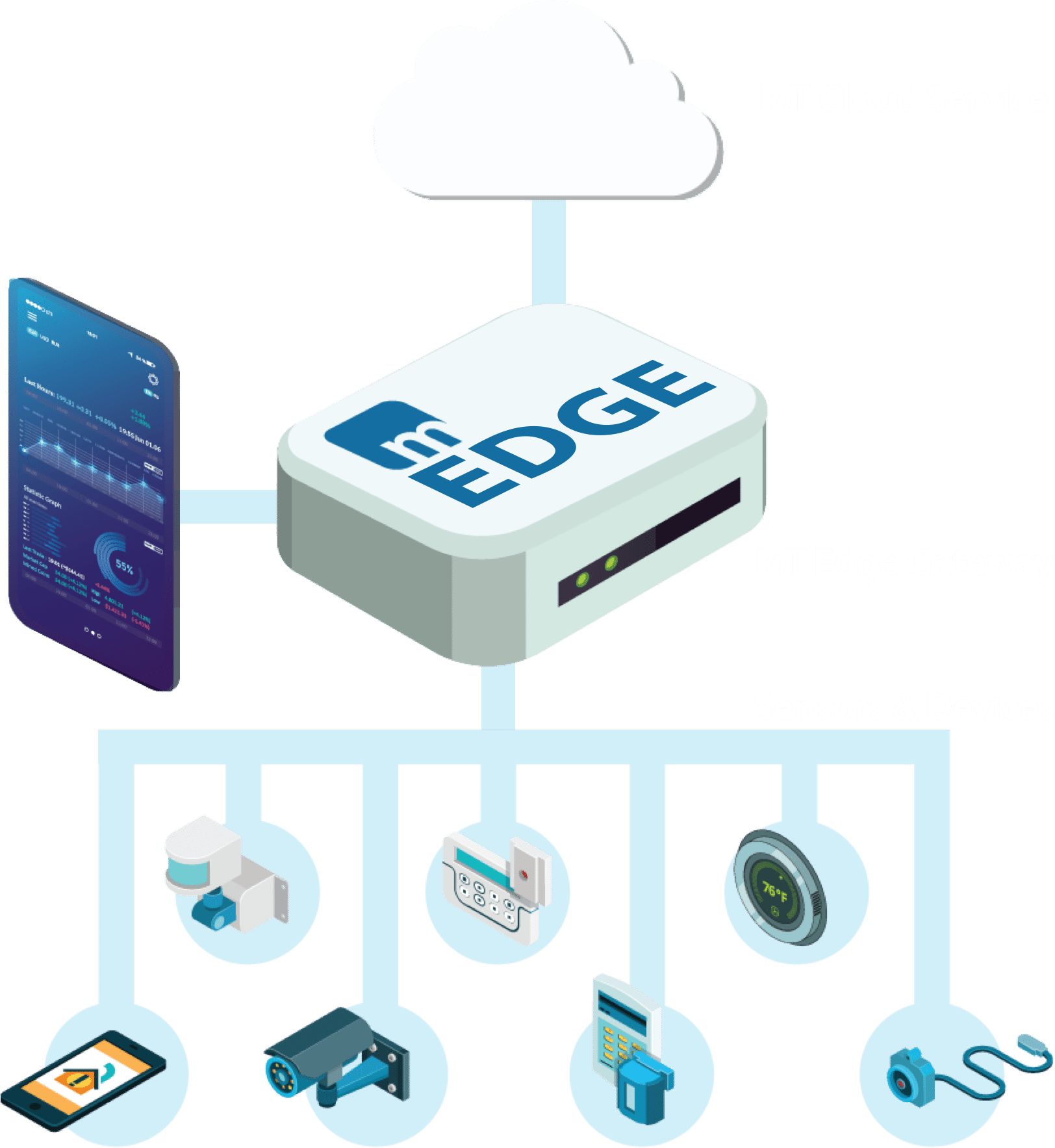
Empower Your IoT Edge Devices
machina.io EDGE provides a secure, web-enabled, and highly modular software development environment for building IoT edge applications using C++ and JavaScript on Linux-based systems. The platform includes middleware components, communication protocols, and powerful APIs that simplify the development of connected IoT solutions.
Using ready-to-deploy software modules, developers can easily collect, process, filter, analyze, and visualize machine and sensor data directly at the edge. By processing data locally, applications can respond faster, reduce network load, and improve overall system efficiency.
machina.io EDGE simplifies the development of software for edge devices, IoT gateways, and embedded systems. Built on an open-source core with optional commercial extensions, the platform offers flexibility and scalability for professional IoT solutions where performance, reliability, and security are essential.
Key Features
- Modular and scalable architecture designed for flexible IoT deployments.
- High performance with low resource consumption, suitable for embedded devices.
- Adaptable for multiple industries and applications, including industrial IoT, automation, and smart infrastructure.
- Hardware-independent platform that supports integration across different devices and systems.
- Industry-proven solution used in millions of connected devices worldwide.
- Dual licensing model, with both open-source (GPL) and commercial licensing options available.

Benefits
Simplify IoT Device Software Development
machina.io EDGE offers powerful high-level APIs that allow developers to build IoT applications using JavaScript as well as C++. This enables development at a higher level of abstraction, reducing complexity and improving productivity for IoT software teams.
Focus on Core Product Innovation
With machina.io EDGE, development teams can concentrate on building unique product features instead of spending time writing infrastructure code or managing third-party dependencies. This helps organizations accelerate development and deliver differentiated IoT solutions.
Avoid Hardware Lock-In
machina.io EDGE enables hardware-independent application development. This flexibility allows developers to switch hardware platforms or support multiple devices using a single codebase, making IoT deployments more adaptable and scalable.
Enable JavaScript-Based Device Programming
The platform supports JavaScript in addition to C++, enabling a wider developer community to build IoT applications. This significantly expands the pool of developers who can create software for embedded and edge devices.
High Performance with Low Resource Usage
machina.io EDGE is designed for demanding edge computing workloads. It delivers high performance while maintaining a small memory and CPU footprint, making it ideal for cost-efficient embedded devices.
Modernize Existing Codebases
Since machina.io EDGE is written in C++, organizations can reuse existing C and C++ code investments. This makes it easier to modernize legacy systems and integrate them into modern IoT architectures.
Features
Datapoint and Device APIs
machina.io EDGE provides powerful APIs that allow developers to access and manage data from sensors, machines, and connected devices. These datapoint APIs can be used from both JavaScript applications and native C++ programs, enabling flexible IoT data integration.
Device Application Server
machina.io EDGE includes an embedded web-based application server that enables developers to build scalable and modular IoT applications. Its flexible module system allows dynamic expansion and simplifies the creation of powerful web-based device management interfaces.
JavaScript Engine
The platform integrates the V8 JavaScript engine, enabling developers to build IoT applications quickly using JavaScript. Code is compiled to optimized native machine code for architectures such as ARM, MIPS, and x86, ensuring excellent runtime performance.
Components and Services Architecture
machina.io EDGE uses a modular components and services architecture. This allows developers to easily build extensible applications that can be upgraded, maintained, and expanded with new features without disrupting existing deployments.
Communication Protocol Support
The platform supports a wide range of modern and legacy communication protocols used in industrial and IoT environments. These include HTTP, MQTT, REST, JSON-RPC, SOAP, UPnP, Modbus, OPC-UA, CANopen, S7, and Bluetooth Low Energy, making device and cloud integration seamless.
Optimized Efficiency and Performance
Developed in C++, machina.io EDGE delivers high performance with a minimal system footprint. Its modular design ensures scalability and reliability, making it suitable for industrial IoT gateways, edge devices, and embedded systems.
Embedded Database
machina.io EDGE uses SQLite as an integrated embedded database for storing device data, logs, and application information. This lightweight database is accessible from both JavaScript and C++ applications running on the device.
Device REST APIs
The platform provides built-in REST APIs for device management, monitoring, and integration with external systems. Developers can also create custom APIs tailored to their IoT applications.
Secure Remote Device Management
machina.io REMOTE enables secure remote management of IoT devices. It supports remote monitoring and control through Web interfaces, SSH, and VNC, ensuring reliable device administration from anywhere.